

One distortion.
Two legendary characters.
And everything in between.
 Try on Anagram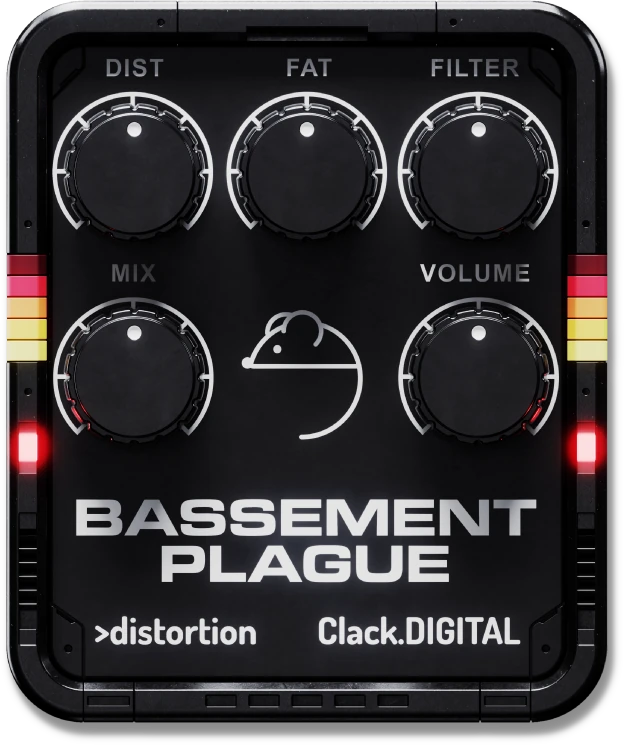
A classic distortion expanded. Morph between two iconic circuit voices or land anywhere no fixed version can reach.
- Fat knob morphs between two classic distortion voices
- Dry/wet mix blends the original signal with the effect
- Carefully tuned parameter ranges for musical, perceptual control
- High-quality anti-aliasing for clean, artifact-free distortion
- Zero-latency processing for immediate, real-time response
- Deep white-box component-level modeling for authentic analog behavior
From subtle grit to heavy fuzz, one effect covers it all.
Demos
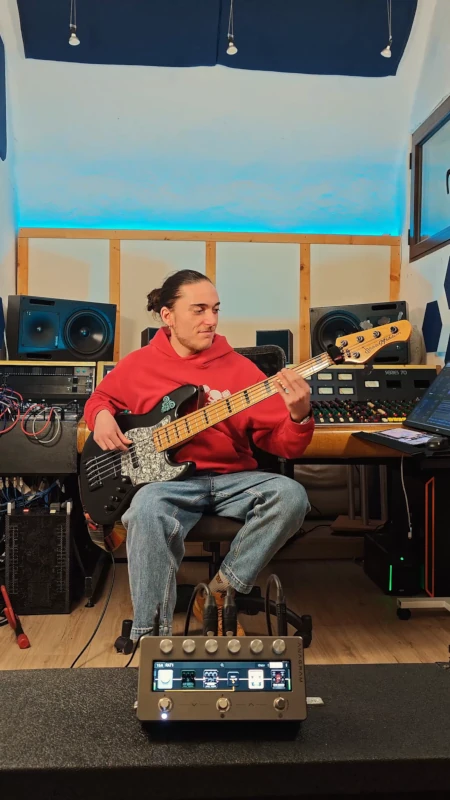
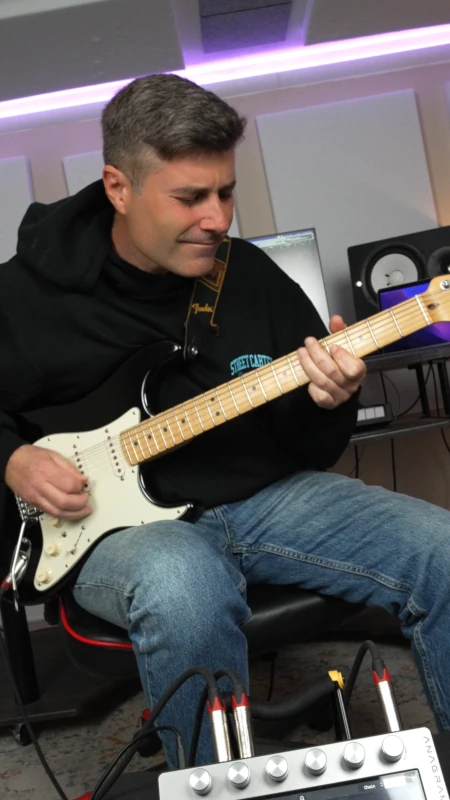
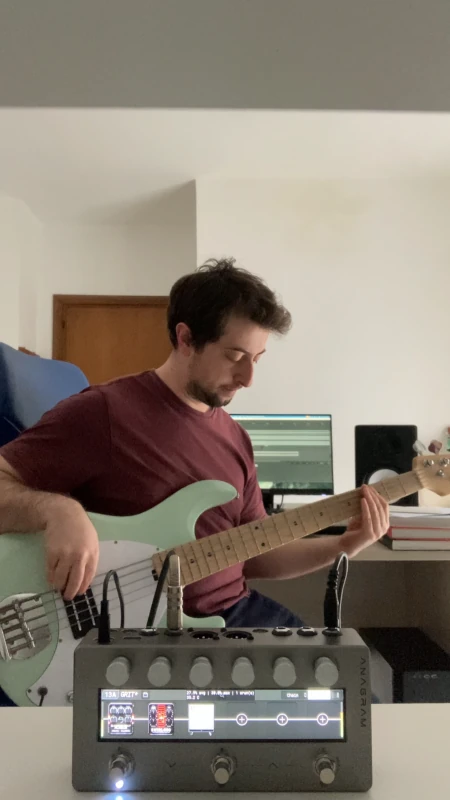
Guitar demo by Benn Romano
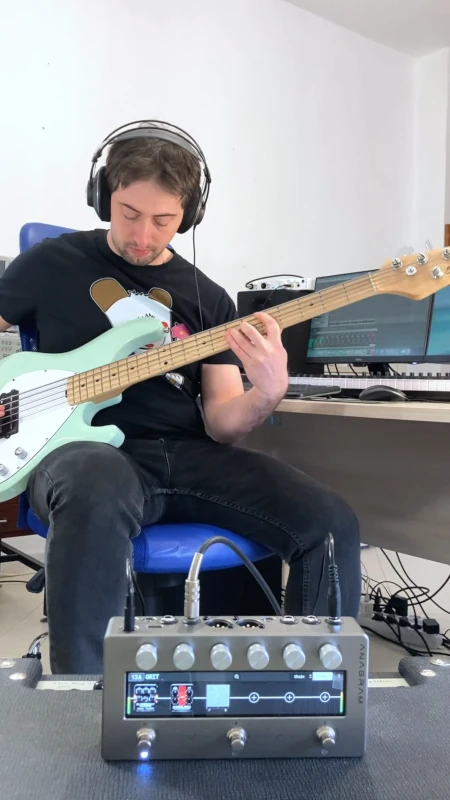
Bass demo by Benn Romano
"Drop D" by Michele De Finis
"Light Pest" by Michele De Finis
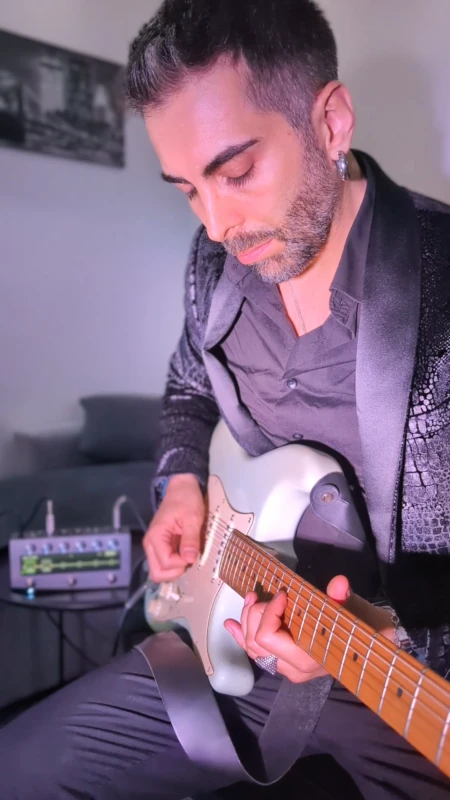
Guitar demo by Giuseppe Monzo
Guitar lick by Giuseppe Monzo
Start with an already versatile and iconic distortion pedal in two distinct versions. Blend between them, add dry/wet mix, and rethink how the controls respond. Meet Bassement Plague.
Morphing between circuit variants

When a pedal maker releases multiple versions of the same design and many of them sound great, you know they got something fundamentally right. Then you start wondering what else might be in there…
Bassement Plague interpolates between two famous versions of the same distortion pedal, letting you continuously explore the sonic space between them via the Fat knob.
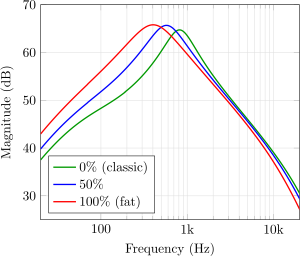
Fat 0% (classic)
Fat 100% (fat)
Fat 50%
Extended signal flow
You like dirt but you also want to keep some clarity?
Bassement Plague gives you a dry/wet Mix knob exactly for that.
For bass, it's essential. On guitar, it opens up new possibilities.
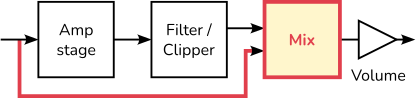
Mix 0% (dry)
Mix 100%
Mix 50%
Unlocking lower gain mode
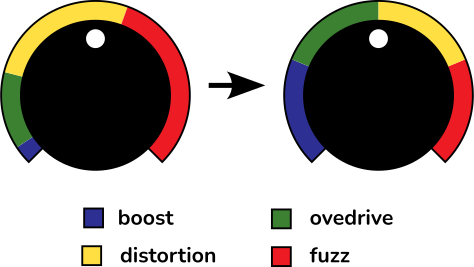
Not everybody knows that the original pedal also sounds very convincing as a booster or overdrive. That's because its Distortion knob range is heavily biased toward the high-gain sounds that made it famous.
Bassement Plague, instead, gives you a much more balanced range for its Distortion knob, making it easier to land on the sweet spots. The knob linearly maps to bandpass gain on the dB scale, aligning much more closely with how we perceive sound.

Sounds great, plays fast
Bassement Plague is built to meet the highest sound quality standards while maintaining maximum playability.
Specifically:
- The engine runs internally at least at a 176.4 kHz sample rate to suppress digital aliasing.
- High-quality IIR resampling ensures zero added latency.
- The original analog circuit is modeled at the component level using white-box techniques, capturing not just the sound, but also the feel and behavior of the hardware.
- Measured average Anagram CPU usage: 3.9%.